Archive for December, 2009

Trinuviel’s Favorites

December 11th, 2009


A Song of Ice and Fire by George Martin


Thanks to the members of BSC I recently discovered Martin’s epic series and it is now among my favorite fantasy books. Martin writes a story on an epic scale but it is really the wonderfully complex characters that carry this series. There are some truly shocking plot-developments and I love how his use of different POVs sometimes makes the reader re-evaluate certain characters (Jaime). His world is primarily inspired by late medieval England and he infuses Westeros with a level of realism that gives his books with a “feel” for history that is on a par with the best of historical fiction (they are, in fact, many points of comparison with the historical fiction of Sharon K. Penman), but at the same time he manages to infuse a magical quality to his world that reminds me of Tolkien. ASOIAF is an utterly captivating read, and I haven’t been this enchanted with a piece of fantasy fiction since reading Jacqueline Carey, Marion Zimmer Bradley and Guy Gavriel Kay.

Kushiel’s Legacy by Jacqueline Carey

Carey’s series is in fact to trilogies, which focusses on two different characters. The first sequence (Kushiel’s Dart, Kushiel’s Chosen, Kushiel’s Avatar is by far the best. These books tells the story of Phèdre nó Delaunay, courtesan and spy. There’s plenty of adventure and exotic lands in these stories, but the heart of the novels is the power of love as a force for positive change in the world. Carey’s world, centered on Terre d’Ange, can best be described as a slightly skewed Renaissance Europe. The books are written in a first person perspective in a lovely prose that is a delight to read. In my review of Kushiel’s Dart, I go into more detail about the themes of this novel.

Guy Gavriel Kay


is another favorite. All of his novels are of a very high quality, but The Lions of al-Rassan is perhaps my favorite. It is a historical fantasy inspired by Spain during the Reconquista of the late middle ages when the Catholics once and for all stamped out the Islamic culture of the Moors. Kay’s novel is a poignant and beautiful elegy of the demise of a sophisticated culture that were able to create a certain space of tolerance for people of differing creeds and religions. The Lions of al-Rassan is a story about three people of different faiths who are thrown together and who learn to respect each other despite differences of faith – in the midst of ever increasing religious conflict.

Marion Kimmer Bradley – The Mists of Avalon, The Firebrand


Classic re-interpretations of The Illiad and the Arthurian legends from a feminist perspective.

Marion Zimmer Bradley, Julian May and Andre Norton – The Black Trillum


another old favorite of mine. Bradley, Norton and May belong to the grand old “dames” of sci-fi and fantasy fiction, and together they have wrought a wonderful and rather original fantasy that incorporate elements of both fairy tale and science fiction. Highly recommended.

Jasper Fforde – Thursday Next Series and Nursery Crimes Series


Welsh author who have created the hilariouly funny Thursday Next. It is set in an alternate England where the Crimean War has lasted more than 150 years, where art appreciation has developed into hooliganism and where you can earn a living as a literary detective. fforde’s novels enganges with the vast and imposing heritage of English literature in an almost postmodern exuberance.

Robin Hobb

is another very good writer of fantasy fiction. Her Farseer trilogy can at times feel rather grim and depressing but she has created a very interesting world and this outweight the harsh trials that she heaps upon her protagonist. Though she is best known for Farseer, I prefer her Liveship Traders (set in the same world) and her Tawny Man (continuing the story from Farseer). Her short novella “Homecoming” (in Legends II, edited by Robert Silverberg) is also very good.


Ellen Kushner


is another very good author. She has written a series of books (Swordspoint, The Privilege of the Sword, The Fall of Kings, which best can be categorized as “fantasy of manners”. The are set in a regency style world, which is low on magic but rife with political intrigue.

Neil Gaiman


Neverwhere and Stardust are, IMO, the best of his novels.


Naomi Novik – Temeraire series


alternate history based on the premise of how the Napoleonic Wars might have played out with an airforce consisting of dragons. Light and humourous reading.

Anne McCaffrey


is an old favorite of mine, particularly her Dragonriders of Pern series and her Crystal Singer trilogy. I can especially recommend Dragonflight, Dragonquest and The White Dragon as well as The Crystal Singer and Killashandra.


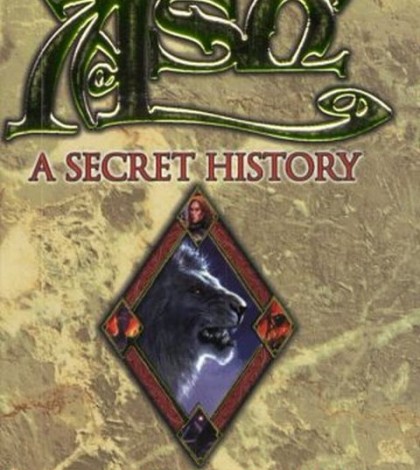
Mary Gentle


writes some truly remarkable alternate history. Ash is her masterpiece, a dense, complex and demanding book that delves into the complex workings of history, myth and fiction – themes that are explore in my review

Michael Ende


German author whose Never-Ending Story and Momo are childhood favorites of mine.


Tamora Pierce


They are mainly YA but very enjoyable and she is consistently improving.

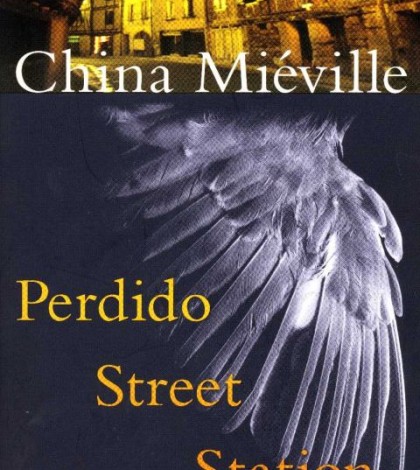
China Mieville, Perido Street Station

A must-read. I wasn’t particularly enamoured by the story but he sure can write. It is the city itself that is the main character, brought to life by a vivid and luscious prose, and brimming with strange hybrid creatures.


Judith Tarr


Judith Tarr’s historical fantasies are also among my favorites. The Hound and the Falcon trilogy is perhaps her best known book, but Alamut is my personal favorite.

Scott Lynch – The Lies of Locke Lamora, Red Seas Under Red Skies


Pure fun!


Ursula le Guin, Earthsea quartet


a wonderful fantasy whose lyricism and philosophical makes for an almost meditative reading experience

Meredith Ann Pierce, The Darkangel Trilogy

old-time favorite, a piece of lyrical fantasy that subtly incorporates elements from sci-fi


Patricia McKillip


I have only just discovered Patricia McKillip and have fallen deeply in love with her lyrical style and her ability to weave words into wonderfully vivid yet dreamlike images


A List of the Most Overlooked Books in Spec Fiction

December 10th, 2009
A Fine and Private Place by Peter S. Beagle

 
Borges: Collected Fictions by Jorge Luis Borges

 
The Compleat Traveller in Black by John Brunner

 
Cowboy Feng’s Space Bar and Grille by Steven Brust

 
The Physiognomy by Jeffrey Ford


Einstein’s Dreams by Alan Lightman

 
Child of the River by Paul J. McAuley


The Death of the Necromancer by Martha Wells

 
The Island of Doctor and Other Stories and Other Stories by Gene
Wolfe


Creatures of Light and Darkness by Roger Zelazny


Steve’s List

December 10th, 2009
Ash by Mary Gentle

Gentle has so many great books, I think this is the best.
Titus Groan by Mervyn Peake

What more can I say? Peake created a world, a microcosm, in a building.
Gloriana by Michael Moorcock

Tribute to Peake, and wonderful alternate reality novel.
The Shadow of the Torturer by Gene Wolfe

One of the best writers of our time.
The Princess Bride by William Goldman

Everyone loves this!

The Walrus and the Warwolf by Hugh Cook

Best pirate fantasy novel ever!
The Gunslinger by Stephen King

My interest in the rest of the series dropped as they thickened. This volume is an almost perfect expression of an author’s conception …

The Last Coin by James P. Blaylock

I can read this over and over. Blaylock is an expert at drawing humour from the idiosyncracies of his very sympathetic characters. Fantasy with a dash of Lovecraft.
Jonathan Strange and Mr Norrell by Susanna Clarke

Hmm … Harry Potter meets The Quincunx?
The Once and Future King by T. H. White

Clever and whimsical Arthurian classic.


Oriental Fantasy: Part I

December 10th, 2009
A Shadow in Summer by Daniel Abraham
A Betrayal in Winter by Daniel Abraham
Maia by Richard Adams

This prequel revisits the setting of Shardik. I didn’t think it was as good as Shardik, but it was fun to revisit the setting, and it has some good political intrigue, which is always welcome in my reads.
Shardik by Richard Adams

This has a bronze age, Middle East setting. It’s much darker and more challenging than Watership Down, so some people don’t like it, I guess. But I found it to be powerful and challenging in a good way.
Daughter of the Empire by Raymond E. Feist and Janny Wurts

Tales of the Otori by Lian Hearn

It’s a fantasy adventure in a far east Asian setting.
Romance of the Three Kingdoms by Guanzhong Lou

A Chinese novel about the events leading up to and part of the Three Kingdoms period of their history.

The Tale of the Heike by Helen McCullough

Simply put, this is the Japanese equivalent to the Illiad.
China Mountain Zhang by Maureen McHugh

This is SF and not feudal, but a damn underrated book.
The Famished Road by Ben Okri
Twelve Kingdoms by Fuyumi Ono

A series of Japanese novels set in a mythical realm based off of ancient China, but with a unique mythology.
Worshiping Small Gods by Richard Parks


Oriental Fantasy: Part II

December 10th, 2009
The Years of Rice and Salt by Kim Stanley Robinson

This is an Asian alternative history novel. It plays on the idea that the entirety of European culture got wiped out by the Black Plague.
Cartomancy by Michael Stackpole

Cartomancy by Michael Stackpole definately has a different feel – more of the “Shogun” variety. Worth reading? I thought so, Stackpole is different in that bad things happen to good people. But he created some amazing people in that book. The sequel wasn’t as good as the first one.
Wizard of the Crow by Ngugi Wa’Thiong’O
My Life as Emperor by Su Tong
The Orphan’s Tales: In the Night Garden by Catherynne Valente

This is composed of original myths based largely on the mythic styles and structures of non-Western countries.

The Grass Cutting Sword by Catherynne Valente
Yume No Hon: The Book of Dreams by Catherynne Valente

Wheel of the Infinite by Martha Wells

Latro in the Mist by Gene Wolfe

The Braided Path series by Chris Wooding

Soul Mountain by Gao Xingjian

set in China, tale that I’d recommend for its “magic realism” moments, among other outstanding elements. He won a Nobel Prize in Literature.
Lord of Light by Roger Zelazny

This plays upon certain Hindu and Buddhist traditions.


Vanin’s Eastern European Book List

December 10th, 2009


The Cyberiad by Stanislaw Lem


Star diaries by Stanislaw Lem


Inne Piesni by Jacek Dukaj


Hard to be a God by Arkady and Boris Strugatsky


Gusliar Wonders by Kirill Bulychev


Last Wish by Andrzej Sapkowski


Robot by Adam Wisniewski-Snerg


Patrick’s Fantasy List

December 10th, 2009


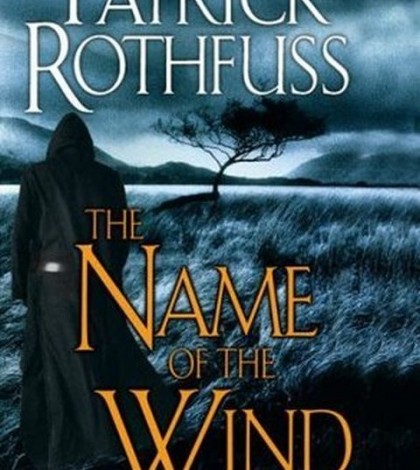
The Name of the Wind by Patrick Rothfuss


A Game of Thrones by George R.R. Martin


The Lies of Locke Lamora by Scott Lynch


Eye of the World by Robert Jordan


Shadowbred by Paul S. Kemp


Homeland by R.A. Salvatore


The Thousand Orcs by R.A. Salvatore


The Nine Princes in Amber by Roger Zelazny


Justin’s Book List

December 10th, 2009
Shadow & Claw – Book of the New Sun by Gene Wolfe

Very little needs to be said here. One of the best series ever written, bar none.
Gormenghast by Mervyn Peake

I’ve been wanting to read Peake for years and finally acquired the Gormenghast trilogy recently. Having read it: I can only say that Peake is a farking incredible writer and this is one of the best works of fantasy, let alone literature that I’ve ever had the pleasure of reading.
Perdido Street Station by China Mieville


Dark, challenging and altogether incredible. I’ve never been this drawn into a depiction of a locale before, with the exception of Mervyn Peake. Peake’s influence is very noticeable, but Mieville’s style is undoubtedly his own
Memory, Sorrow and Thorn by Tad Williams


A wonderful trilogy that takes all the old familiar elements of fantasy, but makes something very new and fresh out of them.
Tigana by Guy Gavriel Kay

One of my particular favorite works of fantasy. Definitely Kay’s best work, IMHO. Something about the prose, to say nothing of his characters and dialogue never fails to captivate me when I re-read Tigana.

The Saga of Recluce by L.E. Modesitt


Admittedly, not every book in the Recluce universe has been outstanding and they do tend to be somewhat formulaic (the coming-of-age story gets re-used a bit), but his depiction of the eternal struggle between order and chaos is fascinating, in particular the later books that depict the perspective of chaos-users.
Song of Ice and Fire by George R.R. Martin

Again, little needs to be said here. A fantastic series that’s only gotten better.

The Farseer Trilogy by Robin Hobb

Definitely one of the best first-person fantasies ever written. Perhaps the best thing about the trilogy is that Fitz is far from being a perfect hero.
The River Into Darkness by Sean Russell

Russell seems to be a lesser-known voice in fantasy, but not deservedly so IMHO. Excellent writer who’s not falling into the same cliches that plague fantasy these days. I would put his "Swan’s War" trilogy on this list as well, but I have yet to read the third book so I’ll wait till I read the complete trilogy before final judgment.

The Riddle-Master of Hed by Patricia
McKillip


For such a short trilogy (each book barely clears 300 pages in paperback form), this is an incredibly deep and well-written classic of fantasy. If nothing else, this should get the prize for having one of the most incredibly unpronouncable names I’ve ever heard.
The Chronicles of Thomas Covenant by
Stephen R. Donaldson


Of course, this has to be on my list. The first fantasy series that really struck a deep chord with me emotionally. Simply magnificent.

Sword of Shadows Trilogy by J.V. Jones

Still waiting for the 3rd book to be published, but the first two are excellent. The best comparison I can think of would be Song of Ice and Fire, in that it’s
very dark and gritty.


Brian’s Mystery List

December 9th, 2009


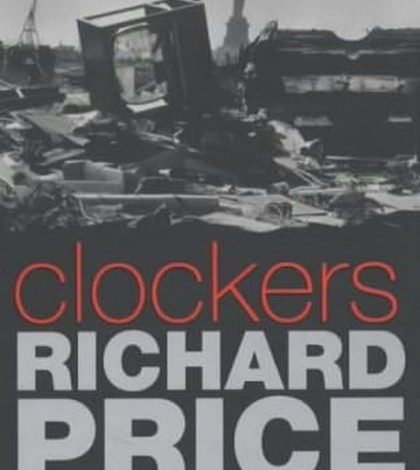
Clockers by Richard Price


Crime Novels : American Noir of the 1930s and 40s


Crime Novels : American Noir of the 1950s


Darkness Take My Hand by Dennis Lehane


Drive by James Sallis


The Guards by Ken Bruen


Homicide by David Simon


Last Good Kiss by James Crumley


The White Trilogy by Ken Bruen


The Wheelman by Duane Swierczynski


Dragonwomant’s List

December 9th, 2009
Bedlam’s Bard by Mercedes Lackey
 

It’s silly, cheesy, preposterous urban fantasy and yet, I find it so enjoyable, I read it at least once a year.

1602 by Neil Gaiman

I’m a fan of nearly everything Gaiman does (with the exception of the *ugh* Skippy post on his blog) but he managed to do something that I never thought possible-make me like Marvel characters. I think that’s pretty powerful, since I much prefer comics/graphic novels like Cerebus, The Books of Magic, Poison Elves, and Pet Shop of Horrors.
War for the Oaks by Emma Bull

This novel is everything Urban Fantasy could and SHOULD be. The suspension of disbelief for this book wasn’t difficult at all. Ms. Bull gives her characters strong personailties and follows through
believably throughout the book.
Good Omens by Neil Gaiman, Terry Pratchett

This one is just a rip-roaring romp of a great book and it’s about the apocalypse. Who knew that the end of the world could be so evastatingly funny? Well, obviously, these two guys.
Jitterbug Perfume by Tom Robbins

I have come to the conclusion that Tom Robbins is good for my soul. This book mixes perfumery, the pursuit of immortality, and the god Pan with a group of potentially hallucinated (but probably not) cave-dwelling swamis into a modern day stew of suspense and humor. There’s also a not very subtle but highly fulfilling love story in there too. Oh yes, and sex. Robbins is awfully fond of making sexual references without actually getting graphic during the actual sex scenes. Tom Robbins novels aren’t usually found in the Sci-Fi/Fantasy shelves, due to some sort of silly nonsense about them being absurdist, satirical literature or some pretentious label like that, but trust me, there is a very large fantasy element in each and every one of his novels. Pan is a real, living, breathing character in the book, and one of the main characters is the former king of a Russian Steppe village who is (if I remember correctly) well over 600 years old. There is also a lot of reverence paid to the humble red beet in the book, it has a starring role, though to explain that little comment, I would give away some very important plot points. I hate spoilers, so I won’t do that to you.


Brian’s Fantasy List: Part III

December 9th, 2009
Sandman by Neil Gaiman

A true epic in scope and story telling and possibly the greatest epic ever told. Simply devastated the conventions of what we imagine comics could be. The heights that it climbs to are stunning. In many ways the pinnacle. Must be read to be believed. Pick a cover any cover
Troika by Stepan Chapman

Never heard of it, not surprised. So utterly amazing that you need to do whatever it takes to get a copy. Go Now! If you send Vandermeer an e-mail you can probably still get a copy.
Veniss Underground by Jeff Vandermeer

Great story by a great writer. The change of narrative perspective could have been a gimmick but was handled flawlessly. In fact it could be a text book on perspective. Most readers choose City of Saints & Madmen as their favorite but Veniss is the one for me.
Viriconium by M John Harrison

Punches Tolkien & his ilk right in the eye, kicks him when he’s down, pees on him, & sets the corpse on fire. There have been other anti-Tolkien & anti-fantasies but this was the first and remains the best. Particularly astute of Harrison to recognize the pitfalls of the genre considering when the first Viriconium book was published.
Watchmen by Alan Moore

Don’t read comics, read this and have your opinion of them changed. A brilliant deconstruction of the super hero mythos. A perfect marriage of words and pictures.

White Apples by Jonathan Carroll

One of my absolute favorites. Profound treaties on big issues draped in the tropes of the fantasy genre. Carroll is the master. The scene at the zoo is one of the most haunting and tragic pieces ever written and is worth the price of admission alone. First book of a planned trilogy, 2nd book is Glass Soup.
Warhound and the Worlds Pain by Michael Moorcock

My personal Moorcock favorite. Elric may be the popular one but I like the Von Bek’s. Grab any of the Eternal Champion books if you see them. They all deserve to be read. A giant in the field of SF&F. The meeting with the sympathetic Miltonian Satan, the commonality of the grail, all brilliant stuff.

Set This House in Order by Matt Ruff
The People of Paper by Salvadore Placencia


Brian’s Fantasy List: Part IV

December 9th, 2009


The Book of the New Sun by Gene Wolfe


Door Number Three by Patrick O’Leary


Last Call by Tim Powers


Lud In The Mist by Hope Mirrlees


The Master and Margarita by Mikhail Bulgakov


Sandman by Neil Gaiman


The Troika by Stepan Chapman


White Apples by Jonathan Carroll


Requiem by Graham Joyce


Riddley Walker by Russell Hoban


Brian’s Fantasy List: Part II

December 9th, 2009
Lord of Light by Roger Zelazny

A great, if sometimes forgotten SF novel. Zelazny’s strongest novel. Also contains what might just be the single worst pun in the history of the novel.
Last Call by Tim Powers

One of my favorite novels. Ever. Period. Tim Powers at his strongest. So complex, so masterfully executed that everything else just pales in comparison. Plus you’ve got Bugsy Seagal as The Fisher King. Followed by Expiration Date & Earthquake Weather
Lud-in-the-Mist by Hope Mirlees

An unclassifiable book. The ending is so delightfully weird that it just takes the story right over the edge and into perfection. I like Catheryne Valiente’s assertion that it is the first slipstream novel.
Mouse and His Child by Russell Hoban

The greatest “quest” novel. Don’t let the fact that it is a children’s book fool you, more happens here then in most books. The most allegorical book since Moby Dick.
Master and Margarita by Mikhail Bulgakov

Possibly the greatest fantasy novel of the 20th century. Brilliant. The story of how it came to see publication is interesting in its own right.

Nausicaa of the Valley of the Wind by Hayao Miyazaki

The classic movie is just the tip of the iceberg of the actual story. A grand epic and as Paul Harvey says “…and now you know the rest of the story.”
Neverwhere by Neil Gaiman

My favorite Gaiman novel. An exiting and well told adventure.

Riddly Walker by Russell Hoban

No other book does more to totally immerse the reader in a created world. The death of our language and the subsequent creation of a new language from its ashes is amazing. The power of language to direct how we view the world. Tolkien created a new world using language, Hoban does the same thing but vastly different. One of the most challenging books that I have ever read and also one of the most rewarding. Also the greatest post-apocalyptic tale ever written. John Leonard of the New York Times said ”… designed to prevent the modern reader from becoming stupid
Requiem by Graham Joyce

Parts of this book haunt me to this day. Joyce deserves a bigger audience. I don’t know if he has a best but this is my favorite.
The Book of the New Sun by Gene Wolfe

The single greatest SFF group of books period. This is the high water mark for the genre. Infinitely re-readable with more and more being revealed with subsequent readings.